Tumors of the sellar region (pituitary gland) removed preferentially via the endoscopic endonasal route.
01 — WHAT IT IS
Tumors of the body's master gland.
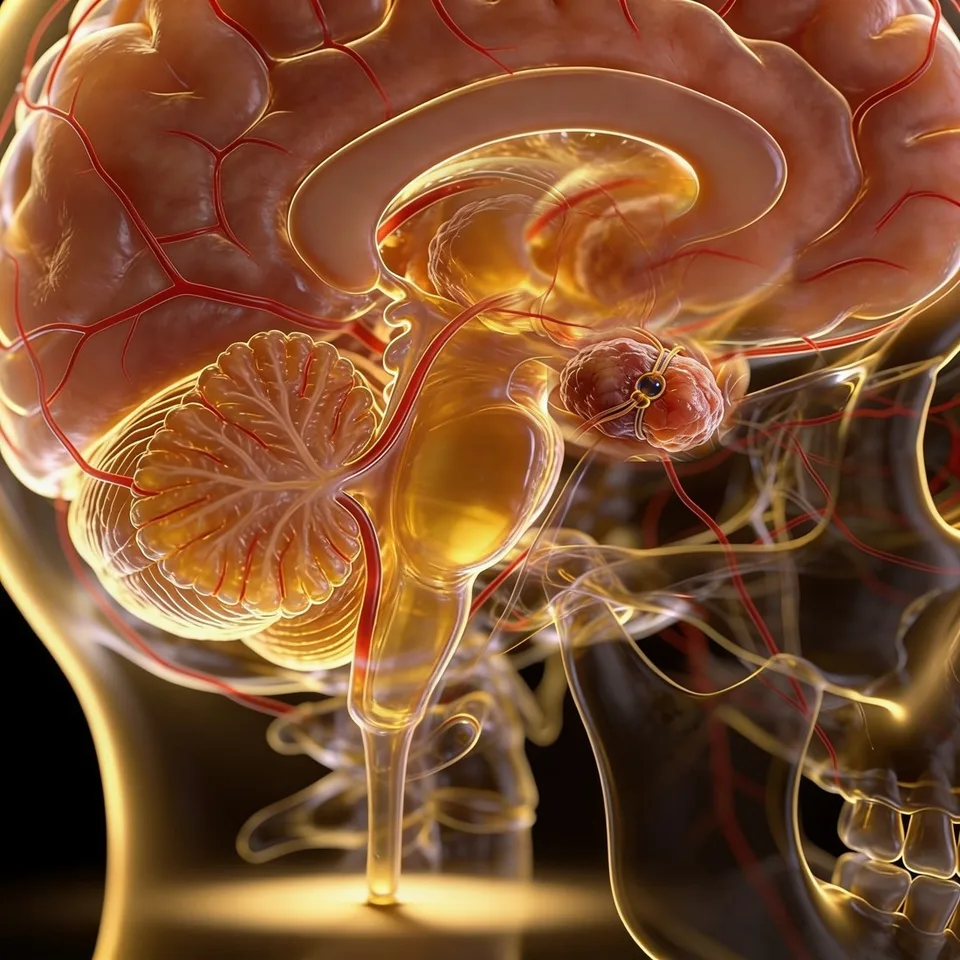
The sellar region comprises the sella turcica, a saddle-shaped bony structure within which the pituitary gland is located — also called the hypophysis or master gland, because it produces or stores most of the hormones involved in the functioning of the body.
Tumors of the sellar region comprise mainly pituitary adenomas, craniopharyngiomas, and meningiomas. Pituitary tumors are divided into hormone-secreting and non-secreting and, by size, into microadenomas (< 1 cm) and macroadenomas (> 1 cm).
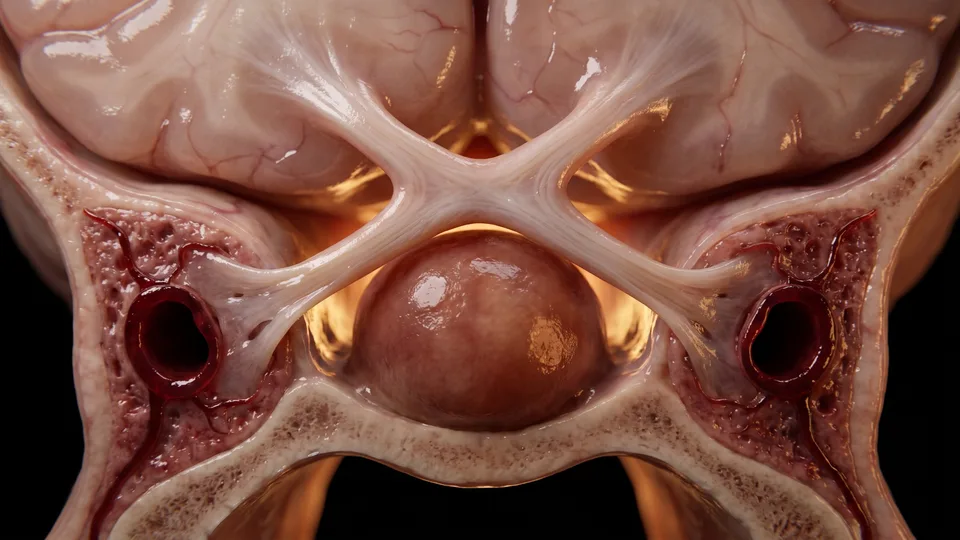
Fig. 01 — Pituitary adenoma and optic chiasm · illustration
02 — SYMPTOMS
How they present
The symptoms depend on the characteristics of the tumor. Non-secreting microadenomas are usually asymptomatic; in secreting ones, they vary according to the hormone in excess. Macroadenomas compress adjacent neurovascular structures — headache and visual changes from compression of the optic nerves are the most common symptoms. In some cases tumor hemorrhage occurs (pituitary apoplexy):
Headache
Visual changes
Hormonal disorders
Pituitary apoplexy
03 — DIAGNOSIS
Imaging and hormonal diagnosis
The diagnosis is made by magnetic resonance imaging, to identify the tumor mass, and by studying the hormones of the hypothalamic-pituitary axis. Computed tomography of the paranasal sinuses may be used to plan the surgical approach.
04 — TREATMENT
Management and treatment
The choice of approach depends on the volume and extent of the tumor:
01
Endoscopic transnasal approach
The preferred route to the sellar region, with microsurgical resection of the lesion — whether the macroadenoma or the hormone-secreting microadenoma — without external incisions.
02
Transcranial approach
Indicated for large tumor volumes, with parasellar or suprasellar extension and compression of brain structures, for the resection of tumors of the sellar region.
“The preferred treatment is the endoscopic transnasal approach, with microsurgical resection of the lesion.”
Questions about your case?
Schedule an evaluation so we can discuss the diagnosis and the treatment path suited to your case.